





Teeth Whitening Strips vs Kits: Which Should You Choose?
Teeth whitening strips vs kits — the two most popular at-home whitening options, and the choice between them is one of the most common questions people have when starting out. If you already know you want strips, our roundup of the best teeth whitening strips UK shoppers can buy compares the top options in detail.
Both methods work. They both deliver real results. But they suit different situations, different goals, and different types of users. Choosing the right one — or understanding how to use both together — can make a significant difference to your results.
Quick AnswerWhen comparing whitening kits against whitening strips, kits generally deliver faster and more noticeable results, typically within 7–10 days, and are more effective on moderate to significant staining. Whitening strips are simpler to use, lower in intensity, and better suited to gradual whitening, maintenance, or users with sensitivity concerns. For most people, the best long-term approach is to use a kit for initial treatment and strips or maintenance products to sustain results.
How Each Method Works
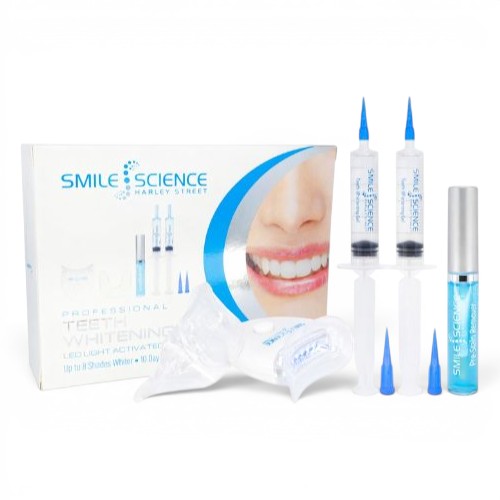
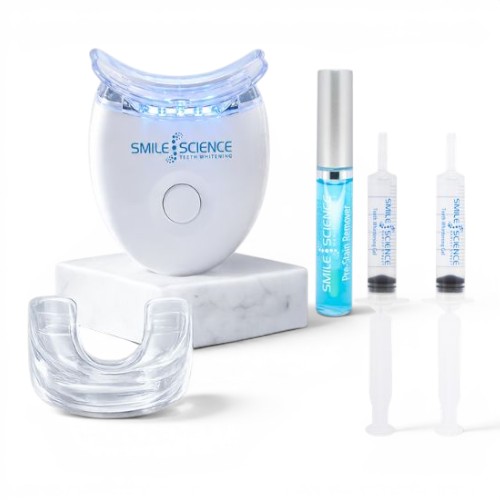
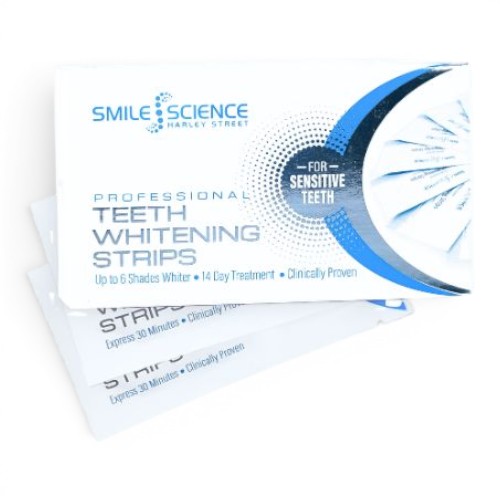
Whitening Strips — strips are thin, flexible adhesive films coated with a whitening gel. Applied directly to the teeth, they hold the gel in contact with the enamel for the duration of the session — typically 20–30 minutes. Used daily over a 7–28 day course, they gradually break down surface stain molecules through the same oxidation process as other whitening products. The delivery is passive — the gel sits on the teeth and works without any activation. This makes strips simple to use but also means the whitening process is more gradual than activated systems. Whitening Kits — whitening kits — particularly LED systems — use a more structured, active treatment approach. A whitening gel is applied to a mouth tray, and an LED device activates and accelerates the gel’s whitening action during each session. The LED light accelerates the oxygen-releasing reaction in the gel, making the active ingredient work more efficiently within the same session time. This accelerated process is what makes kits faster and more effective on deeper or more established staining than strips alone.The Core Differences
| Feature | Whitening Kits | Whitening Strips |
|---|---|---|
| Speed | Fast (7–10 days) | Medium (1–3 weeks) |
| Whitening depth | Deeper staining | Surface staining |
| Ease of use | Moderate | Very easy |
| Sensitivity | Low–Medium | Low |
| Session time | 10–20 minutes | 20–30 minutes |
| Best for | Structured treatment, visible results | Daily routine, gradual whitening |
| Long-term use | Periodic courses | Continuous or maintenance |
Where Kits Have the Advantage
Speed and effectiveness on established staining — this is where kits clearly outperform strips. The combination of a stronger whitening gel with LED activation delivers faster, more pronounced results — particularly for moderate to significant staining from coffee, tea, wine, or smoking. If you want visible results within 7–10 days, a kit is the better choice. Structured treatment approach — kits provide a defined treatment course with clear daily sessions and a structured process. This reduces guesswork and tends to produce more consistent, even results compared to the more passive, variable approach of strips. Deeper staining — for staining that has accumulated over time and become more embedded in the enamel, the LED activation in kit systems helps the whitening gel work more efficiently at depth — something strips alone are less equipped to address.Where Strips Have the Advantage
Simplicity — strips require no device, no charging, no tray preparation. You apply them and go about your day. For users who want the lowest-effort whitening routine, strips are clearly simpler. Lower sensitivity — because strips deliver a lower-intensity whitening effect — no LED activation, typically lower gel concentrations — they tend to produce less sensitivity for most users. For people who’ve experienced discomfort with kit systems, strips often provide a more comfortable experience. Ongoing and flexible use — strips lend themselves better to an ongoing, flexible routine. Rather than a defined treatment course, you can use strips more regularly as part of a maintenance approach, in a way that a full kit system isn’t designed for. Travel and convenience — strips are more portable than kit systems — no device to carry, no charging cable needed. For regular travellers, this is a practical advantage.Which Should You Choose?
Choose a Whitening Kit If
- You want fast, noticeable results within 7–10 days
- You have moderate to significant staining from coffee, tea, wine, or smoking
- You prefer a structured, defined treatment course
- You’ve used strips before and found the results underwhelming
- You’re whitening ahead of a specific event or occasion
Choose Whitening Strips If
- You want a simple, low-effort daily routine
- Your staining is light to moderate
- You’re sensitive to whitening products and want a gentler approach
- You’re maintaining results from a previous kit treatment
- You want a flexible, ongoing whitening approach rather than a defined course
Using Both Together — The Most Effective Long-Term Approach
For many people, the best results come from using both in sequence rather than choosing one over the other. How this works in practice:- Initial treatment — complete a full LED whitening kit course (7–10 days) to achieve the strongest starting result
- Maintenance — use whitening strips periodically, alongside daily maintenance products, to sustain brightness and prevent significant staining from returning
- Top-up — use a refill kit for periodic top-up courses; use strips in between for ongoing upkeep
What About Sensitivity?
Both methods can cause some sensitivity, but there are meaningful differences, and NHS guidance on teeth whitening confirms temporary sensitivity is the most common side effect across whitening methods. Strips, being lower intensity and without LED activation, tend to cause less sensitivity than kit systems for most users. For people who’ve found kits uncomfortable in the past, strips are often a more manageable alternative. For kit users concerned about sensitivity, choosing a system formulated with Sodium Percarbonate rather than high-peroxide gel significantly reduces sensitivity risk while maintaining effectiveness.Realistic Results — What to Expect from Each
From a Whitening Kit
- Visible improvement after the first few sessions for most users
- Clear, noticeable whitening by the end of a 7–10 day course
- Stronger results on moderate to significant staining than strips alone
- Longer-lasting baseline when followed by a maintenance routine
From Whitening Strips
- Gradual improvement over the treatment course — results build day by day
- Most users see clear improvement by the end of a 14–28 day course
- Better suited to light to moderate staining; deeper staining may need a kit first
- Results are maintained more easily when combined with daily maintenance products
Choosing Whitening Strips: Course Length
Strips come in different course lengths — 7, 14, and 28 days — and the right choice affects results.- 7 day strips — quick boost for light staining or short-term use; suitable alongside maintenance
- 14 day teeth whitening strips — balanced approach, most popular choice for regular whitening
- 28 day strips — strongest strip-based results; suited to more persistent surface staining and users committed to a longer routine
Recommended Products
Related Guides
Frequently Asked Questions
Which is better — whitening strips or whitening kits?For light to moderate surface staining, strips can deliver good results — but kits generally work faster and more effectively on established staining. For the strongest results, a kit is the better primary treatment.
Can I use whitening strips every day?During a treatment course, daily use is typically fine as directed. Using strips continuously beyond the recommended course is not advisable — daily maintenance products are better suited to ongoing daily use.
How long do strip results last compared to kit results?Kit results tend to last longer as a baseline — typically 6–12 months with maintenance vs 3–6 months for strips. In both cases, a consistent daily maintenance routine significantly extends longevity.
Are strips better for sensitive teeth than kits?Generally yes — strips are lower intensity and tend to cause less sensitivity than LED kit systems. For sensitive users who want kit-level results, a Sodium Percarbonate-based kit is a sensible compromise.
Can I use strips after completing a kit course?Yes — this is one of the most practical maintenance approaches. Strips used periodically after a kit treatment help sustain results without needing another full course as frequently.