PAP Whitening vs Peroxide: Which Is Better for Your Teeth?
If you’ve looked into teeth whitening recently, you’ve likely come across both PAP whitening and peroxide-based products. These are two of the most common whitening approaches available today — and they work in meaningfully different ways.
Understanding the difference helps you choose the right system for your teeth, your sensitivity level, and the results you want. This guide explains how each ingredient works, how they compare on speed, sensitivity, and effectiveness, and where a third approach — Sodium Percarbonate — fits into the picture.
Quick AnswerNeither is universally better — they suit different needs. Peroxide-based whitening is generally faster and more powerful, making it effective for significant staining. PAP whitening is gentler and associated with lower sensitivity, making it better suited to those with sensitive teeth or for gradual daily use. Sodium Percarbonate offers a middle ground — oxygen-based whitening designed to balance effectiveness with reduced sensitivity compared to high-peroxide systems.
How PAP Whitening and Peroxide Work
Peroxide Whitening — hydrogen peroxide and carbamide peroxide are the most widely used whitening ingredients. They work by penetrating the enamel and releasing reactive oxygen molecules that break apart stain compounds embedded within the tooth structure. Because peroxide penetrates the enamel, it can address both surface staining and staining that has become embedded more deeply over time — which is what makes it effective, and also what makes it more likely to cause sensitivity in some users.
- Hydrogen peroxide — fast-acting, directly releases oxygen
- Carbamide peroxide — breaks down into hydrogen peroxide when applied, slightly slower release
- Both work through the same underlying oxidation mechanism
In the UK, consumer products are legally limited to 0.1% hydrogen peroxide, per
NHS guidance on teeth whitening. Higher concentrations are only available through dental professionals.
PAP Whitening (Phthalimidoperoxycaproic Acid) — PAP is a newer, peroxide-free whitening ingredient. Unlike peroxide, it works primarily on the surface of the enamel rather than penetrating it — breaking down stain molecules through oxidation without the same level of enamel permeability. Because PAP doesn’t penetrate the enamel as deeply, it is generally associated with significantly lower sensitivity. The trade-off is that results tend to be more gradual and may be less effective on deeper or older staining.
Sodium Percarbonate Whitening — Sodium Percarbonate is an oxygen-releasing compound that breaks down into hydrogen peroxide and sodium carbonate when activated. Used in carefully formulated whitening systems, it delivers oxygen-based stain removal designed to balance effectiveness with reduced sensitivity compared to high-peroxide treatments. It works by releasing oxygen to break down stain molecules on and within the enamel — providing meaningful whitening without relying on the higher peroxide concentrations associated with increased discomfort. This approach is particularly relevant for structured at-home systems where the goal is effective stain removal while keeping the sensitivity profile low.
How They Compare
Sensitivity — The Key Practical Difference
For many people, sensitivity is the deciding factor when choosing a whitening approach.
Why peroxide causes more sensitivity — peroxide penetrates the enamel and can temporarily affect the dentinal tubules — microscopic channels that connect to the nerve of the tooth. This is what causes the sharp, temporary sensitivity some people experience during or after whitening. It is not damage — it is a physiological response that typically resolves within 24–48 hours — but it is uncomfortable enough to be a meaningful barrier for some users. Higher concentration = greater penetration = higher sensitivity risk.
Why PAP causes less sensitivity — because PAP works closer to the enamel surface rather than penetrating as deeply, it has less effect on the dentinal tubules. Most users — including those who have previously experienced sensitivity with peroxide products — find PAP significantly more comfortable.
Where Sodium Percarbonate sits — Sodium Percarbonate systems release oxygen in a more controlled way than direct hydrogen peroxide application. This controlled release is designed to deliver effective whitening while limiting the intensity of enamel penetration — resulting in a lower sensitivity profile than high-peroxide treatments while still delivering meaningful stain removal.
Effectiveness — What Each Can and Can’t Do
Peroxide — most effective for significant, established staining — particularly older staining that has penetrated deeper into the enamel. At the concentrations available in consumer products in the UK (0.1% hydrogen peroxide), results are still meaningful but are more moderate than professional treatments. For faster, stronger results within consumer regulation limits, structured systems that combine gel formulation with LED activation are the most effective approach.
PAP — most effective for surface staining and gradual maintenance whitening. PAP-based products work well as part of a daily routine — PAP whitening powder used during brushing, for example — progressively reducing surface staining over time. For users with significant established staining, PAP alone may produce more gradual results than a structured treatment course.
Sodium Percarbonate — effective for both surface and embedded staining, particularly in a structured treatment format. The oxygen-release mechanism breaks down stain molecules efficiently without requiring high peroxide concentrations. For most users with typical coffee, tea, or general dietary staining, Sodium Percarbonate-based systems can deliver visible results within a standard treatment period.
Which Should You Choose?
Choose a Peroxide-Based System If
- You want the fastest possible results
- You don’t have significant sensitivity concerns
- You are comfortable with professional treatment under dental supervision for stronger concentrations
Choose a PAP-Based Approach If
- You have sensitive teeth and want to minimise discomfort
- You are looking for a daily-use product for gradual whitening
- You want a peroxide-free routine
Choose a Sodium Percarbonate System If
- You want effective stain removal with a lower sensitivity profile
- You prefer a structured at-home treatment course
- You want to balance meaningful results with comfort
For most people doing at-home whitening, Sodium Percarbonate-based systems offer a practical middle ground — more effective than PAP alone for established staining, with a more comfortable experience than high-peroxide alternatives.
How They Fit Into a Whitening Routine
Treatment phase — where you want meaningful stain removal:
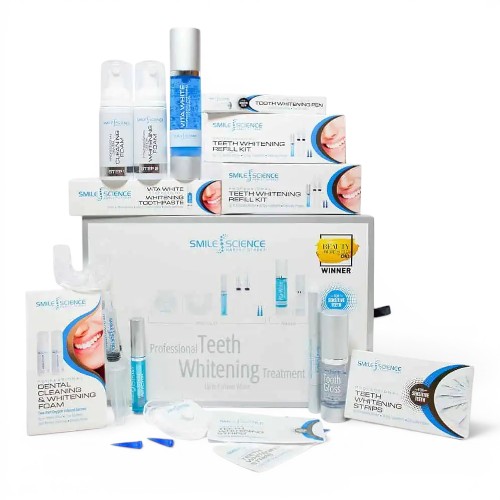
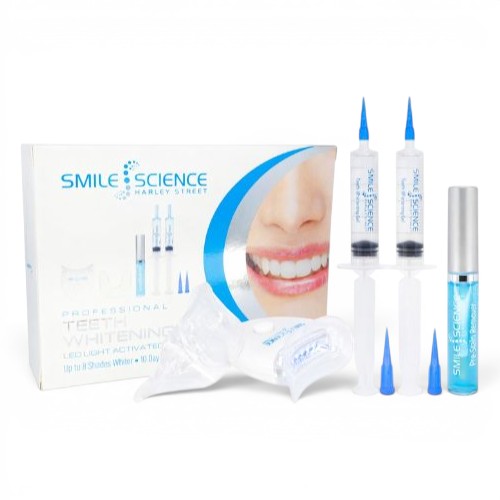
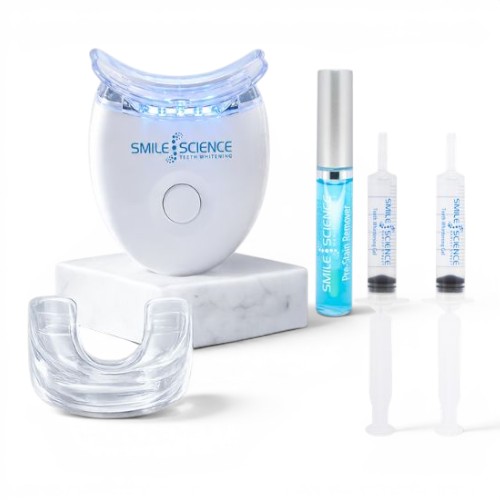
- Sodium Percarbonate LED kit — structured treatment, 7–10 days
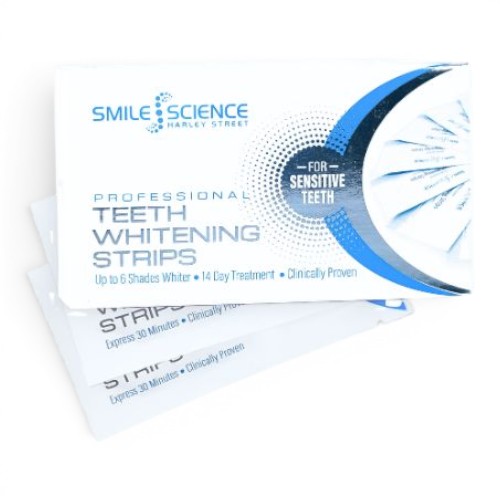
- Peroxide strips — for those comfortable with higher intensity
Daily maintenance phase — where you want to prevent staining and maintain brightness:
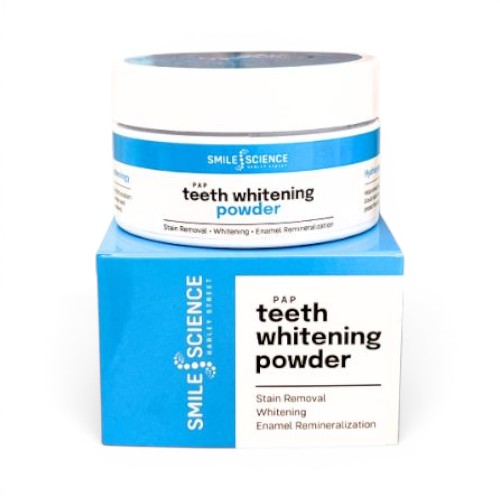
- PAP whitening powder — gentle daily whitening during brushing
- Whitening foam — daily stain prevention
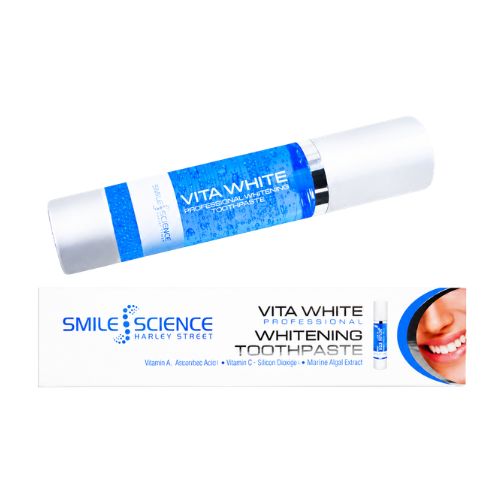
- Whitening toothpaste — base daily maintenance
This combination — a Sodium Percarbonate treatment course followed by PAP-based daily maintenance — gives you the effectiveness of a structured treatment with the gentleness of PAP for ongoing upkeep. If you’re specifically comparing strip products, our
comparison of the top whitening strips in the UK breaks down which brands use PAP, peroxide, and other actives.
The Bigger Picture — Why Ingredient Choice Matters
The whitening market has moved significantly in recent years. The rise of PAP as a mainstream ingredient reflects growing consumer demand for effective products that don’t compromise on comfort. At the same time, properly formulated oxygen-based systems — including Sodium Percarbonate — have demonstrated that effective whitening doesn’t require high peroxide concentrations.
For the consumer, this means more genuine choice than existed a few years ago. The decision is less about which ingredient is objectively superior and more about matching the right tool to your specific needs — your staining level, sensitivity profile, and how you want to structure your routine.
Recommended Products
Related Guides
Frequently Asked Questions
Does PAP whiten teeth as fast as peroxide?Generally no, PAP tends to work more gradually, particularly on established staining. For faster results, a Sodium Percarbonate or peroxide-based structured treatment is more effective.
Is PAP whitening safe for daily use?Yes, PAP whitening products are designed for regular daily use and are generally well-tolerated even by those with sensitive teeth.
Why do some brands use Sodium Percarbonate instead of peroxide?Sodium Percarbonate allows effective oxygen-based whitening with a more controlled release profile than direct peroxide application, designed to balance results with reduced sensitivity.
Can I switch between PAP and peroxide products?Yes, many people use a peroxide or Sodium Percarbonate treatment course periodically and maintain results with PAP-based daily products. This is a sensible approach that combines the strengths of both.
Is peroxide-free whitening better for sensitive teeth?For most people with sensitivity concerns, peroxide-free approaches, PAP or controlled Sodium Percarbonate systems are more comfortable. The right choice depends on your sensitivity level and the results you want.
Are expensive PAP products worth it?PAP effectiveness varies significantly between formulations. The ingredient itself is not a guarantee of quality — the full formulation, concentration, and delivery method all affect results.