





Best Toothpaste for Sensitive Teeth UK
Tooth sensitivity affects around 41% of people in the UK — making it one of the most common oral health concerns, and finding the best toothpaste for sensitive teeth can make a real difference. If you wince at a cold drink, feel discomfort when eating something sweet, or find brushing uncomfortable, the toothpaste you use every day matters more than most people realise.
This guide explains what causes sensitivity, what to look for in the best toothpaste for sensitive teeth, and how the main options compare — including why some formulations offer more targeted protection than standard sensitivity toothpastes.
Quick AnswerThe best toothpaste for sensitive teeth contains ingredients that actively address the cause of sensitivity at the nerve level — not just mask it temporarily. Formulations using Spilanthes Acamella (clinically proven to combat Dentinal Hypersensitivity), potassium nitrate, or stannous fluoride offer more targeted protection than standard abrasive-based sensitivity toothpastes. Avoiding calcium carbonate — a common abrasive in standard toothpastes — is also important for genuinely sensitive teeth.
What Causes Tooth Sensitivity
Tooth sensitivity — clinically known as Dentinal Hypersensitivity — occurs when the dentinal tubules become exposed or more permeable. The NHS notes that sensitive teeth are a common cause of tooth pain, particularly when eating or drinking something hot, cold, or sweet. These are microscopic channels within the tooth structure that connect the outer enamel to the dental pulp and its nerve endings. When stimuli such as cold, heat, sweet foods, or pressure reach these channels, they trigger a pain response at the nerve.
Common causes of increased dentinal tubule exposure include:
- Enamel wear from acidic diet, acid reflux, or aggressive brushing
- Gum recession exposing the root surface, which has no enamel layer
- Naturally thin or porous enamel
- Post-whitening sensitivity — temporary increased enamel permeability after treatment
- Cracked or chipped teeth exposing inner layers
Understanding the cause helps you choose the most appropriate toothpaste approach — since different formulations address sensitivity through different mechanisms.
How Sensitivity Toothpastes Work
Nerve desensitisation — ingredients like potassium nitrate penetrate the dentinal tubules and reduce the nerve’s response to stimuli. This reduces the pain signal without blocking the tubule itself. Results build over several weeks of consistent use.
Tubule occlusion — ingredients physically block or seal the dentinal tubules, reducing the transmission of stimuli to the nerve. Stannous fluoride and certain mineral compounds work this way. The effect can be relatively rapid but may wash away over time.
Nerve-level action — newer ingredients like Spilanthes Acamella (derived from the African Toothache Tree) work directly at the nerve level to reduce the sensitivity response, independent of tubule blocking. Clinical studies have demonstrated this approach to be effective at combating Dentinal Hypersensitivity.
What to Look For — and What to Avoid
Look For
- Spilanthes Acamella — clinically proven to combat Dentinal Hypersensitivity at the nerve level
- Potassium nitrate — desensitises the nerve through consistent use
- Stannous fluoride — provides tubule occlusion alongside enamel protection
- Fluoride — essential for enamel remineralisation and strengthening
- Aloe Vera — anti-inflammatory, soothes gum tissue around sensitive areas
- Low or no calcium carbonate — avoids adding abrasion to already-vulnerable enamel
Avoid for Sensitive Teeth
- High calcium carbonate content — a common abrasive that can worsen surface sensitivity over time
- Highly abrasive whitening toothpastes — look for a low RDA (Relative Dentin Abrasivity) score
- Peroxide-based toothpastes if sensitivity is significant — peroxide penetrates the enamel and can temporarily increase sensitivity
- Acidic toothpastes — can soften enamel temporarily and increase reactivity
Comparing the Best Toothpaste for Sensitive Teeth
| Ingredient / Approach | Mechanism | Speed of Effect | Best For |
|---|---|---|---|
| Spilanthes Acamella | Nerve-level action | Progressive with use | Dentinal Hypersensitivity, daily protection |
| Potassium nitrate | Nerve desensitisation | Builds over weeks | General sensitivity, ongoing use |
| Stannous fluoride | Tubule occlusion + enamel | Relatively fast | Surface-level sensitivity, enamel protection |
| Standard sensitivity paste | Mild occlusion | Gradual | Light sensitivity, general use |
Sensitive Toothpaste and Whitening — Can You Do Both?
A common concern for people with sensitive teeth is whether they can whiten effectively without making sensitivity worse. The answer is yes — with the right approach.
Using a sensitivity-focused toothpaste before and during a whitening course is one of the most effective ways to manage whitening-related sensitivity. Starting use two weeks before a whitening course helps reduce baseline reactivity, making the treatment more comfortable without reducing whitening effectiveness.
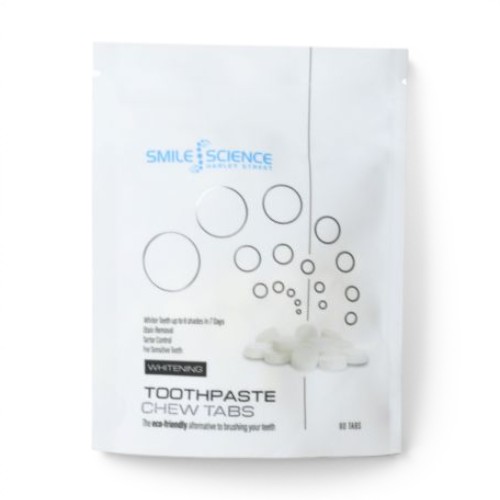
The Smile Science Sensitive Toothpaste Tablets are specifically designed to work alongside whitening products — providing sensitivity protection that makes whitening courses more manageable for those who would otherwise find them uncomfortable.
The Smile Science Approach to Sensitive Teeth
The Smile Science Sensitive Toothpaste Tablets are built around Spilanthes Acamella — sourced from the African Toothache Tree — which is clinically proven to combat Dentinal Hypersensitivity at the nerve level. The formulation also includes Aloe Vera for anti-inflammatory gum support and Sodium Bicarbonate for gentle stain removal without the abrasion risk of calcium carbonate-based products.
Crucially, the tablets contain no calcium carbonate — an ingredient found in many standard toothpastes and sensitivity products that can be counterproductively abrasive for genuinely sensitive teeth. The fluoride content actively supports enamel remineralisation with every use, helping to strengthen enamel over time rather than just managing symptoms.
Practical Tips for Managing Sensitivity
- Switch to a soft-bristle toothbrush — medium and hard bristles increase enamel and gum abrasion
- Use a sensitivity toothpaste consistently — results build over weeks, not after a single use
- Avoid highly acidic foods and drinks before brushing — acid softens enamel temporarily, increasing reactivity
- Don’t brush immediately after consuming acidic food or drink — wait 30 minutes
- If sensitivity is severe or localised to one tooth, see a dentist — this can indicate decay, cracking, or gum recession requiring treatment
- Begin a sensitivity toothpaste two weeks before a whitening course to reduce baseline reactivity
When to See a Dentist
Over-the-counter sensitivity toothpaste is appropriate for most people with general sensitivity. However, see a dentist if:
- Sensitivity is severe, persistent, or getting worse over time
- Sensitivity is isolated to one specific tooth
- You have visible gum recession
- Sensitivity doesn’t improve after 4–6 weeks of consistent use of a sensitivity toothpaste
- You experience pain that lingers for more than a few seconds after the stimulus is removed
Recommended Products
Related Guides
Frequently Asked Questions
How long does sensitivity toothpaste take to work?Most sensitivity toothpastes work progressively — consistent twice-daily use typically shows meaningful improvement within 2–4 weeks. Formulations using Spilanthes Acamella work at the nerve level and build their effect with regular use.
Can I use sensitivity toothpaste every day?Yes — sensitivity toothpastes are designed for twice-daily use as a direct replacement for standard toothpaste. Consistent daily use is what delivers the most effective protection.
What is Dentinal Hypersensitivity?Dentinal Hypersensitivity is the clinical term for tooth sensitivity — caused by exposure or increased permeability of the dentinal tubules, which connect the outer enamel to the nerve. It affects around 41% of people and causes sharp discomfort in response to cold, heat, sweet, or pressure stimuli.
Is sensitivity toothpaste safe to use long-term?Yes — sensitivity toothpastes are formulated for ongoing daily use. Using them consistently is more effective than using them intermittently, as protective benefits build over time.
Can I use sensitivity toothpaste with whitening products?Yes — and it’s actively recommended. Using a sensitivity toothpaste before and during a whitening course helps reduce baseline reactivity and makes the treatment more comfortable. Begin use two weeks before starting whitening for best results.
What is the best toothpaste for sensitive teeth?The best toothpaste for sensitive teeth addresses the cause of sensitivity directly — through nerve desensitisation, tubule occlusion, or nerve-level ingredients like Spilanthes Acamella — rather than just masking discomfort temporarily.