




Are Toothpaste Tablets Any Good?
Toothpaste tablets have gained considerable attention in recent years — partly driven by growing interest in sustainable alternatives to plastic-heavy personal care products, and partly by genuine improvements in tablet formulation that have made them a viable everyday option.
But the question remains a fair one: are they actually any good? Do they clean as well? Are they worth the switch? This guide gives an honest, evidence-based answer.
Quick AnswerYes — well-formulated toothpaste tablets are genuinely good. They clean equivalently to traditional toothpaste, require no compromises on oral health protection, and offer real advantages in sustainability, travel, and ingredient quality. The caveat is formulation quality: as with traditional toothpaste, there’s a meaningful difference between well-formulated and poorly-formulated products. Choosing a reputable brand with clinically proven ingredients matters.
The Short History of Toothpaste Tablets
Toothpaste tablets first emerged as a niche eco-product — appealing primarily to sustainability-focused consumers willing to accept some trade-offs for reduced plastic use. Early formulations were often basic, lacked fluoride, and produced an unfamiliar texture that deterred many users. The category has changed significantly. Modern toothpaste tablet formulations — particularly from brands that have invested in clinical development rather than just reformatting existing ingredients — now match or exceed traditional toothpastes on multiple measures. Clinically proven whitening, sensitivity protection, and antibacterial action are all achievable in tablet format.What the Evidence Says
The cleaning effectiveness of toothpaste tablets has been studied, and the results are reassuring. The fundamental mechanism — mild abrasives, active ingredients, fluoride — is the same as conventional toothpaste. The tablet format does not inherently reduce cleaning efficacy. Clinically developed tablet formulations can demonstrate measurable results:- Surface stain removal — the Smile Science Whitening Tablets are clinically proven to whiten up to 6 shades in 10 days
- Sensitivity protection — Spilanthes Acamella, used in the Smile Science Sensitive and Complete Protection tablets, is clinically proven to combat Dentinal Hypersensitivity
- Antibacterial action — Vaccinium Macrocarpon (Cranberry) Extract in the Complete Protection tablets is clinically proven to reduce harmful bacterial load
Common Concerns — Answered
“They won’t clean as well as regular toothpaste” — the concern is understandable but not borne out by evidence. The chewing step activates the tablet into a paste with very similar properties to conventional toothpaste. Abrasive action, active ingredient delivery, and fluoride protection all function as intended. The two-minute brush time and technique matter more than the format. “They won’t foam properly” — toothpaste tablets do produce foam, though typically less than heavily foamed conventional pastes. Importantly, foam is not what cleans your teeth — it’s a surfactant effect that gives the sensation of cleaning without meaningfully contributing to it. Less foam is not a sign of reduced effectiveness. “They don’t contain fluoride” — early eco-focused tablet brands often omitted fluoride due to difficulties with dry-format inclusion. This is no longer a universal concern — the Smile Science range includes Sodium Fluoride in every tablet to support enamel remineralisation with every use, in line with NHS guidance recommending fluoride toothpaste for effective daily protection. Always check the label. “The texture feels different” — this is true and worth acknowledging. The first few uses feel slightly different from squeezing paste from a tube. For most people, this normalises within a few days. It’s a habit adjustment rather than a meaningful practical barrier. “They’re more expensive” — per-use cost is comparable to mid-range conventional toothpaste. Premium tablet formulations with clinically proven ingredients sit at a similar price point to quality conventional brands. The sustainability benefits may represent additional value for users factoring environmental impact into their purchasing decisions.What Makes a Good Toothpaste Tablet
Not all toothpaste tablets are created equal. The key things to look for:- Fluoride included — essential for enamel remineralisation, and the single most important thing to check on the label. All Smile Science tablets include Sodium Fluoride
- Clinically active ingredients — look for ingredients with demonstrated efficacy, not just natural-sounding names
- No calcium carbonate — or very low levels. This common abrasive is unnecessary for cleaning and can be counterproductive for sensitive teeth
- Reputable manufacturer — produced within UK or EU cosmetic regulatory frameworks with appropriate safety testing
- Specific functional claims backed by evidence — whitening, sensitivity protection, antibacterial action should be supported by clinical data, not just ingredient lists
The Smile Science Toothpaste Tablet Range
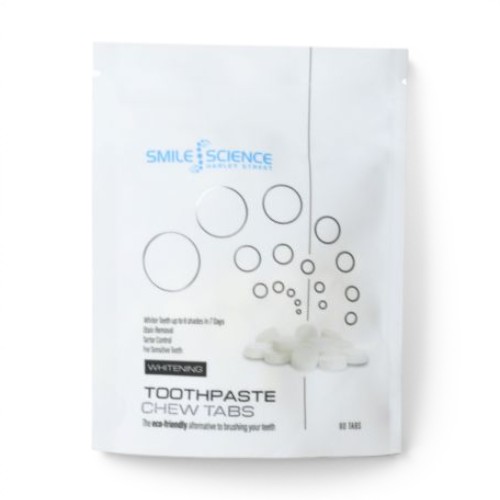
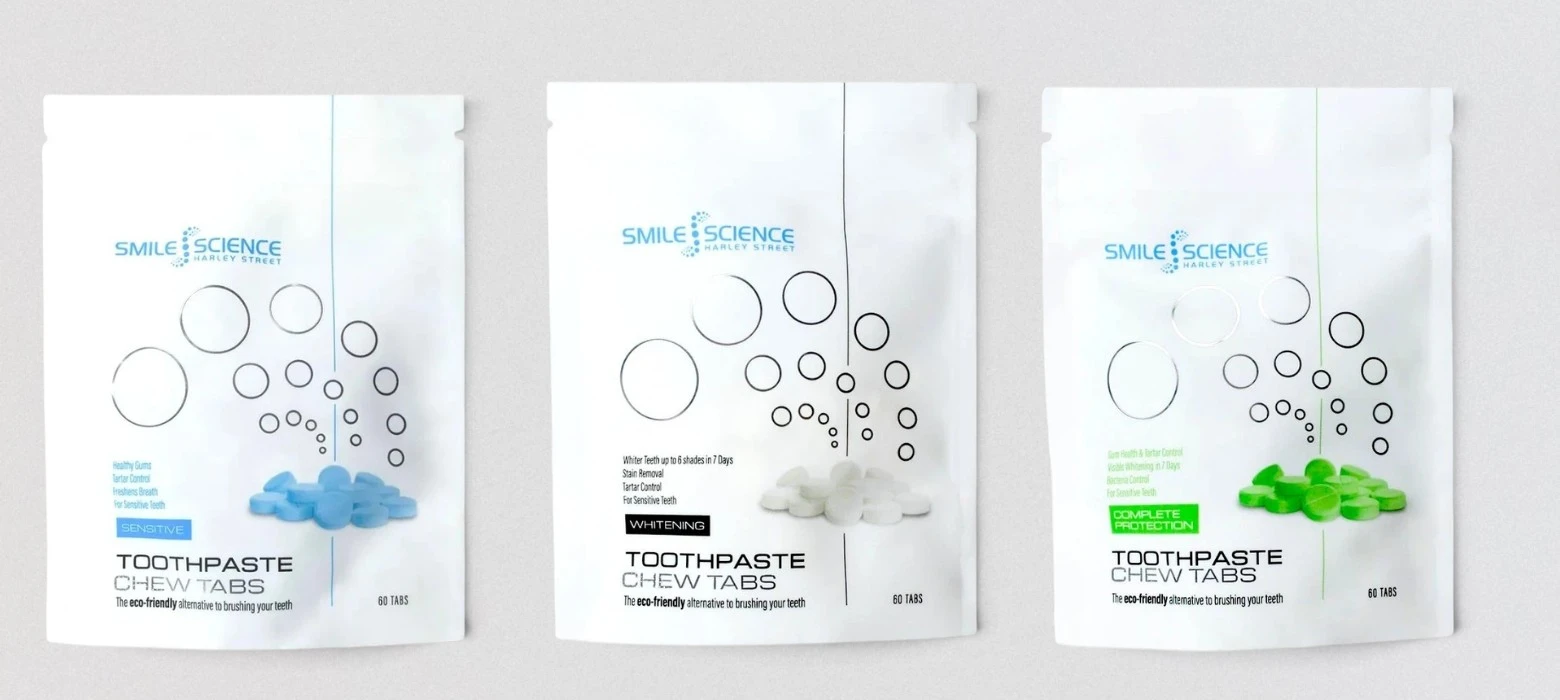
The Smile Science range offers three tablet formulations, each addressing a specific oral health priority: Whitening Toothpaste Tablets — combine Sodium Bicarbonate, Activated Charcoal, and Vitamin C for clinically proven surface stain removal. Up to 6 shades whiter in 10 days with consistent twice-daily use. Formulated without calcium carbonate, making it gentler on enamel than many whitening toothpastes. Sensitive Toothpaste Tablets — built around Spilanthes Acamella, clinically proven to combat Dentinal Hypersensitivity at the nerve level. Aloe Vera provides anti-inflammatory gum support. No calcium carbonate. Fluoride included. Designed to be used daily by those with sensitive teeth, and before and during whitening courses to reduce baseline reactivity. Complete Protection Toothpaste Tablets — the most comprehensive formulation in the range. Combines antibacterial action (Vaccinium Macrocarpon Cranberry Extract), sensitivity protection (Spilanthes Acamella), stain removal (Activated Charcoal, Sodium Bicarbonate), gum care (Aloe Vera), and breath freshening (Peppermint) in a single twice-daily tablet. Clinically proven to reduce harmful bacteria. All three are vegan, cruelty-free, Made in Britain, and packaged in LDPE pouches using 79% less plastic than a standard toothpaste tube — 100% recyclable via kerbside collection.Who Are Toothpaste Tablets Best For?
Best For
- Anyone wanting to reduce plastic use without compromising on oral health
- Frequent travellers who want to avoid liquid restrictions
- Those who want more targeted active ingredients than standard toothpaste provides
- Sensitive teeth users looking for a formulation without harsh abrasives
- Anyone who values pre-measured dosing and less waste
Less Ideal For
- Households with young children where the chewing step isn’t appropriate
- Those who find the habit adjustment off-putting and prioritise familiarity above all
Recommended Products
Related Guides
Frequently Asked Questions
Do toothpaste tablets actually work?Yes — well-formulated toothpaste tablets clean equivalently to conventional toothpaste. Clinically developed formulations can demonstrate measurable results including whitening, sensitivity protection, and antibacterial action.
Why do toothpaste tablets produce less foam?Foam is produced by surfactants in toothpaste but doesn’t meaningfully contribute to cleaning effectiveness. Many tablet formulations use lower levels of foaming agents — this is not a sign of reduced performance.
Are all toothpaste tablets the same?No — formulation quality varies significantly. Key differences include whether fluoride is included, the type and level of abrasives used, and whether active ingredients have clinical evidence behind them. Choosing a brand with demonstrated efficacy matters.
How do you use toothpaste tablets?Place one tablet in your mouth, chew briefly until it forms a paste, apply to a damp toothbrush, and brush for two minutes as normal. Rinse thoroughly. Use twice daily as a complete replacement for conventional toothpaste.
Are toothpaste tablets more expensive than regular toothpaste?Per-use cost is comparable to mid-range conventional toothpaste. Premium clinically formulated tablets sit at a similar price to quality conventional brands — with the added benefit of reduced plastic packaging.
Can toothpaste tablets replace my regular toothpaste entirely?Yes — provided the tablets include fluoride (as all Smile Science tablets do) and are used twice daily, they are a complete replacement for conventional toothpaste with no compromise on oral health protection.